Tuesday, October 29, 2013

Bad Science - Dr. Ben Goldacre


Bad Science is a non-fictional book that exposes how the media, journalists, nutritionists, pharmaceutical corporations and homeopaths (I've read so much about them it makes me sigh to hear their name), have been abusing science and statistics to get to the minds of people. This book targets all the charlatans and bullshitters of the marketing world that manipulate and exploit the name of science. 
The book looks at the 'bad science' behind nutritionists, looking at their 'evidence-based' facts and questionable internet credentials. Goldacre has all the evidence and scientific truths to defend his perfectly fair investigation of the variety of people that fall under his research quadrat. A perfect example is trying to find the 'study' that a certain nutritionist found that backs up how pomegranates can actually protect you from aging - this is not the case, there is no such study that justifies this lie about pomegranates. 
The book questions the so-called facts and double-checks evidence; Goldacre has no remorse to expose the truth as it is or whom it may offend and polishes it off with esoteric humour. It reveals how the media encourages and spreads the misuse of science; and reveals the truths, half-truths and the very beneficial lies as are used in the medical, nutritional and marketing worlds. 
A truly interesting, fun and informative book to read; I highly recommend Bad Science as a must-read book. Dr. Ben Goldacre sends a clear message with this book: equip yourself with the knowledge to tell the difference between the regrettably abundant 'bad science' and the verifiable 'true science'.

Monday, October 28, 2013

"Cat On a Hot Tin Roof" by Tennessee Williams

The 'Cat On a Hot Tin Roof' is a classic play by Tennessee Williams. It is his fifth play to reach the screen and it speaks of Daddy Pollitt, a wealthy owner of Mississippi plantations, who is alcoholic and  unaware of the fact that he is dying of cancer. His hopeless wife tries to stop him from drinking but unsuccessfully. 
A significant theme in this play is the manliness and homosexuality. This is represented in the title. Brick is considered the "Cat", a broken man, and Cat concerns itself with the elaboration of shattered manliness. Bricks fell in love with an individual named Skipper but this love is unable to be discussed neither satisfied. 

I recommend this book to anybody who enjoys emotional yet interesting genres. 

Sunday, October 27, 2013

"The Glass Menagerie" by Tennessee Williams

"The Glass Menagerie" is a four-character memory play by Tennessee Williams. 
The play is introduced by the narrator as well as protagonist, Tom, as a memory play based on his recollection of his sister Laura and of his mother Amanda. First published in 1945, the Glass Menagerie represents the drama amongst this particular family and the tragedy they keep up with. Amanda, the mother of Tom, is an aged Southern belle who was abandoned by her husband long ago. Her daughter Laura is one of her major worries due to her tremendous insecurity when it comes to the outside world. Amanda is obsessed with finding her daughter a gentlemen caller due to her drop out of high school and subsequent secretarial course which seems to be leading her nowhere. Tom is the man who works and supports the family but often gets carried away with boredom. Once bored, Tom either goes to the cinema or stands on the balcony smoking cigarettes. 


Personally, I feel this family, especially Amanda, live in a dream world, locked up in a little bubble. They are completely unaware of anything which happens amongst them and do not feel any need to find out. 

"Tender is the Night" by F. Scott Fitzgerald

Tender is the night, a novel by F. Scott Fitzgerald, takes place in the French Riviera in the 1920s. It is a sad story about a wealthy and content couple, Nicole and Dick Diver. They create various admirers, upon them a young lady named Rosemary Hoyt. She falls deeply in love with Dick, this being where the perfection of the couple begins to fall apart. 


This particular novel excited many genres such as modernism, surrealism, horror/gothic fiction and romance. This classic was a literary movement of Modernism which gained a large reacting audience to World War I. The horror of war was only scoped by the imaginations of the people who had experienced it. However in Tender is the Night, the idea of literal landscape and the narrative structure itself are shattered. Romance is also a major genre due to the fact that the characters love each other to the extreme. 

"May Day" by F. Scott Fitzgerald

During the october break, the book which grasped by attention is "May Day". This novel by F. Scott Fitzgerald, first published in 1920, speaks during the political May Day riots in Ohio in 1919. The story takes place in New York and the reader is introduced to three individual stories which coincide which each other; the story of the newspaper offices, the story of Sterrett and the story of Key and Rose. Many of these characters are in complicated dilemmas such as Sterrett which becomes bankrupt or Edith who "typifies the idealistic modern woman who seeks perfection and is repelled by anything less". 


I enjoyed reading this book. I love Fitzgerald's style of writing and the unique way in which he presents each and every character. 

Tuesday, June 18, 2013

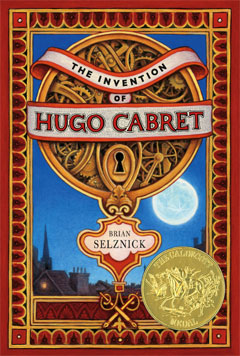
The Invention of Hugo Cabret by Brian Selznick


This is a book that was also turned into a movie. This book was a very quick read, because it was almost completely pictures. This book is based on a true story of a French Pioneer filmmaker.
I actually did not enjoy reading this book as much as everyone else. I did not enjoy the fact that there were so many pictures because I felt that that didn't aid the imagination, but rather hindered it. I also did not enjoy the story line of this book. I found the story to not have much description in the writing, because of all the pictures that were aiding the story. I enjoy reading a book that is very descriptive because I enjoy picturing things in my mind. I also watched the movie of this book, but it strayed from it a lot and I did not enjoy watching it either.
                                                    Touching the Void - By Joe Simpson

  1.   Based on a true story....
  2. Joe and Simon, are trying to climb the Siula Grande (West Side). The succeed eventually as before a few groups have tried, but they failed. After they reached the top and celebrated. They then eventually decided to descend from the North Ridge. 
  3.  Then there was disaster. Joe slipped down an ice cliff, then he landed very awkwardly, as he broke his leg. Later Simon found him, and brought him back up. But thought to himself that he hoped that he died, since it would be extremely hard to descend with him back down the mountain. After this there was bad weather, and this made it hard to move on. Their stove wouldn't work since they didn't have enough fuel for it and they had barely any water. 
  4.  As the weather became worse, they needed to get down the cliff that is about 3,000m high. Simon makes a 300ft rope and tries to descend Joe down from the glacier. It took a very long time and Joe and Simon felt like they were a team again. The weather became worse and it was very hard for them to descend. Their hands were badly frost-bitten, but they descended lower.
  5.  They eventually thought that they were at the bottom but suddenly, beneath Joe (100ft) there was a huge crevasse (crack). They were now in a very bad position as Joe couldn't climb the rope and Simon couldn't pull him up because of frost bite. 
  6.  Simon realised that this was his chance, as Joe could not see him. He cut the rope and that sent Joe flying down and into the crevasse. But  he was alive. He had landed on an ice bridge with two drops either side. Simon though descended down the mountain alone, as Joe tried to call out for someone to help but there was no-one there. He managed to screw himself to the wall with his frostbite. He never gave up though as he pushed himself up. Then he saw the other part of the rope that was cut. He later cried himself to sleep. He continued to cry out but there was still no answer, the he decided that he had to descend.
  7. From there, Joe spent three days without food and with almost no water, crawling and hopping five miles back to their base camp.
  8. Simpson's survival is widely regarded by mountaineers as amongst the most amazing pieces of mountaineering survival